
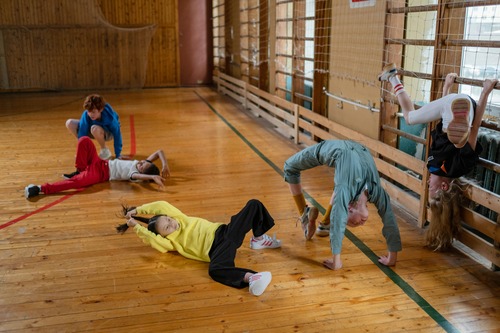
The first thing that hits you when you walk into the Chesapeake Community Center on a Thursday night isn’t the music—it’s the aroma of sofrito mixing with the faint scent of barbecue from the restaurant next door. It’s 7:30 PM, and the monthly “Salsa y Más” social is in full swing, a cultural collision that perfectly captures the unique character of Latin dance in the heart of Virginia.
On the polished wooden floor, a woman in cowboy boots follows the intricate footwork of bachata while her partner, a recent transplant from El Salvador, guides her through the sensual rhythm. Nearby, a group of teenagers practice their merengue steps, their laughter echoing off walls decorated with both Virginia state flags and colorful papel picado banners. The DJ seamlessly blends Marc Anthony with a little George Strait, and somehow, it all makes perfect sense.
“This is what happens when two cultures decide to dance together instead of standing apart,” says Elena Morales, watching the scene unfold with the satisfaction of someone who’s watched her vision come to life. “We’re not trying to recreate San Juan or Havana here in Chesapeake. We’re creating something entirely new—something that’s authentically us.”
The Seeds of Rhythm
Morales, a 45-year-old physical therapist who moved to Chesapeake from Puerto Rico in 2009, never intended to become the unofficial ambassador of Latin dance to South Hampton Roads. She was simply homesick and looking for a way to connect with the rhythms that had shaped her childhood.
“I remember driving around Chesapeake in those early years, thinking, ‘Where is everybody dancing?'” she recalls. “I’d find country line dancing, some ballroom classes, but nothing that spoke to my soul. So I decided to create it myself.”
What started as informal salsa lessons in her garage grew into something much larger. Word spread through Chesapeake’s growing Latino community—military families stationed at Norfolk Naval Base, professionals drawn to the area’s economic opportunities, and long-time residents with Caribbean or Central American roots who’d been quietly yearning for a cultural connection.
The breakthrough came in 2016 when Morales partnered with James “Jimmy” Robertson, a native Chesapeake resident and former country music DJ who’d fallen in love with Latin rhythms during a deployment to Colombia. Together, they convinced the city’s Parks and Recreation Department to let them host monthly Latin dance socials at the community center.
“People thought we were crazy,” Robertson laughs, adjusting his signature cowboy hat before demonstrating a salsa turn. “Here I was, this country boy from Chesapeake, trying to teach salsa to folks who’d never heard of clave rhythm. But music is universal, and dance is even more so.”
Building Bridges Through Movement
The success of “Salsa y Más” reflects broader demographic shifts in Chesapeake. The city’s Latino population has grown by nearly 40% over the past decade, fueled by military relocations, job opportunities in healthcare and technology, and families seeking affordable alternatives to higher-cost metropolitan areas.
Dr. Sofia Restrepo, who moved to Chesapeake from Colombia in 2018 to work at Chesapeake Regional Medical Center, found the Latin dance community through a recommendation from a colleague. “I was struggling with the isolation that comes with being far from home,” she explains. “But walking into that first salsa night, hearing Spanish mixed with Southern accents, seeing people from so many different backgrounds moving to the same beat—it felt like finding family.”
Restrepo has since become one of the community’s most popular bachata instructors, known for her ability to break down complex movements into manageable steps for beginners. Her classes draw an eclectic mix: military spouses seeking social connection, empty nesters exploring new hobbies, college students from nearby schools, and established Latino families wanting to share their culture with neighbors.
“Dance breaks down barriers that language sometimes can’t,” she observes. “When you’re learning to follow someone’s lead in merengue, you’re not thinking about where they’re from or what they do for work. You’re just moving together.”
Southern Rhythms, Latin Soul
The fusion of Southern hospitality with Latin passion creates a unique atmosphere at Chesapeake’s Latin dance events. Food plays a central role—potluck-style gatherings where traditional empanadas sit alongside cornbread, and sweet tea shares table space with fresh fruit agua frescas.
“Y’all come hungry and leave family,” has become the unofficial motto of the monthly socials, a phrase that captures the blending of linguistic traditions happening on and off the dance floor.
The music reflects this cultural synthesis as well. DJ Carlos Mendoza, who moved to Chesapeake from Texas in 2014, has perfected the art of reading the room’s energy. “I might start with traditional salsa, then throw in some country music with a Latin beat, maybe some reggaeton that gets the young folks moving,” he explains. “The key is understanding that this isn’t about authentic versus non-authentic—it’s about creating something that speaks to everyone in the room.”
This inclusive approach has attracted dancers from across the ethnic spectrum. Mary Ellen Thompson, a 62-year-old retired teacher whose family has lived in Chesapeake for generations, started taking salsa lessons two years ago and now rarely misses a social.
“I was terrified at first,” she admits. “I thought I was too old, too Southern, too set in my ways. But these folks welcomed me with open arms. Now I joke that I’ve got more rhythm than my granddaughter, and she’s got to deal with it.”
The Next Generation
Perhaps the most telling sign of Latin dance’s integration into Chesapeake culture is its adoption by young people who see no contradiction between their Southern roots and their love of bachata. The community center now hosts a weekly youth Latin dance program, and several local high schools have added Latin dance clubs to their extracurricular offerings.
Sixteen-year-old Ashley Martinez, whose father is from Mexico and whose mother grew up in rural Virginia, embodies this cultural fusion. “My friends think it’s cool that I can two-step and salsa,” she says. “It’s not about choosing sides—it’s about being able to move to whatever music is playing.”
The youth program, co-led by Morales and Robertson, has become a pipeline for the next generation of dancers and, more importantly, cultural ambassadors. These young people are growing up understanding that identity isn’t about choosing between traditions—it’s about weaving them together into something stronger.
Dancing Into the Future
As Chesapeake continues to diversify, the Latin dance community serves as a model for cultural integration that celebrates difference rather than erasing it. The monthly socials now regularly draw 150-200 people, and plans are underway for an annual Latin dance festival that would bring instructors and performers from across the region.
“We’re not just teaching dance steps,” Morales reflects, watching couples of all backgrounds navigate the dance floor with increasing confidence. “We’re teaching people that culture is something you can share, not something you have to guard. And that’s a lesson that extends far beyond the dance floor.”
As the evening winds down and the last notes of a romantic bolero fade away, the community center slowly empties. But the connections made, the barriers broken, and the joy shared linger in the air like the lingering scent of sofrito—a reminder that sometimes the most beautiful cultural explosions happen not with conflict, but with an invitation to dance.